Yong Jae Lee
Published: February 8, 2026 · Reviewed: March 2026 · 7 min read
Researched and written by Yong Jae Lee · Content follows Australian Dietary Guidelines
Practical strategies for packing healthy, delicious school lunches on a tight budget — with shopping tips for Woolworths and Coles, batch cooking ideas, and weekly meal plans.
The Real Cost of School Lunches in Australia
With the cost of living rising across Australia, families are feeling the pinch at the supermarket. Across our menu set, priced at regular Woolworths shelf prices, the median lunchbox works out at about $3.10 a day — roughly $15.50 for a school week — and with some planning you can come in under that.
This guide breaks down exactly how to do it — with real Woolworths pricing (the chain this site tracks), practical batch cooking strategies, and a complete weekly meal plan.
The Golden Rules of Budget Lunchbox Planning
Rule 1: Plan Before You Shop
The single biggest money-saver is planning. Decide on the week's lunches before you step into the supermarket. This prevents:
- Impulse buying of expensive pre-packaged snacks
- Food waste from unused ingredients
- Last-minute takeaway purchases when you run out of ideas
Rule 2: Buy Whole, Not Pre-Packaged
Pre-packaged "lunchbox ready" snacks are convenient but expensive. Compare:
- Pre-sliced cheese (10 slices): ~$5.50 vs block of cheese (500g, ~20 slices): ~$5.00
- Individual yoghurt pouches (4 pack): ~$6.00 vs 1kg tub of yoghurt: ~$5.50 (equivalent to 8+ serves)
- Pre-cut carrot sticks (200g): ~$3.50 vs 1kg bag of carrots: ~$2.00
Rule 3: Embrace Leftovers
Last night's dinner is tomorrow's lunchbox. Cook a little extra of every evening meal and set aside a lunch portion before serving dinner. This costs virtually nothing extra.
Rule 4: Batch Cook on Weekends
Spend 1-2 hours on a Sunday preparing lunchbox staples for the entire week. Muffins, frittata, pasta salad, and energy balls all keep well in the fridge for 4-5 days.
Weekly Budget Breakdown: $15 Per Child
Here is a realistic breakdown of how $15 covers five days of school lunches:
| Item | Weekly Cost | Serves |
|---|---|---|
| Wholemeal bread (1 loaf) | $3.50 | 5 sandwiches |
| Cheese block (250g) | $3.00 | 5 serves |
| Deli chicken/ham (200g) | $3.00 | 5 sandwiches |
| Carrots (1kg bag) | $2.00 | 5+ serves |
| Seasonal fruit (e.g. bananas, apples) | $3.00 | 5+ serves |
| Yoghurt tub (1kg) | $5.50 | 5+ serves |
| Crackers (1 packet) | $2.00 | 5+ serves |
| Total | ~$22.00 | But serves 2 children easily |
| Per child | ~$11.00 |
This leaves $4 per child for variety items like hummus, dried fruit, or baking ingredients. And the yoghurt, cheese, and crackers will likely stretch further than five serves.
Smart Shopping Strategies
At Woolworths
- Woolworths Essentials/Homebrand range is cheaper than the branded equivalent on most staples — compare the unit price on the shelf label rather than the pack price, since pack sizes differ
- Half-price specials rotate weekly — stock up on non-perishables when they are on sale
- Woolworths Online lets you compare prices easily and avoid impulse buys
- Odd Bunch fruits and vegetables are perfectly good produce at reduced prices
At Coles
- Coles Brand products are reliable and budget-friendly
- Flybuys points add up — redeem them for money off your shop
- Coles Online "lowest unit price" sorting helps you find the best deals
- Check the reduced-to-clear section for marked-down bakery items, yoghurts near expiry, and deli items
At Aldi
- Aldi consistently offers the lowest base prices on staples like bread, cheese, yoghurt, and fruit
- Their seasonal fruit and veg section is excellent value
- Aldi muesli bars and snack packs are often half the price of branded equivalents
Farmers Markets & Fruit Shops
- Local markets often sell seasonal produce at lower prices than supermarkets, especially towards the end of the trading day
- Asian grocers are excellent for cheap vegetables, rice, and noodles
Batch Cooking Recipes That Save Money
Savoury Muffins (Makes 12 — cost ~$5 total)
- 2 cups self-raising flour ($0.50)
- 1 cup grated cheese ($2.00)
- 1 cup corn kernels (tinned, $1.00)
- 1 cup milk ($0.50)
- 2 eggs ($1.00)
- Salt and pepper
Mix dry ingredients, add wet, stir until just combined. Bake at 180°C for 20 minutes. Freeze individually wrapped.
Veggie Frittata (Serves 8 — cost ~$6 total)
- 8 eggs ($3.00)
- 1 zucchini, grated ($1.00)
- 1 cup frozen peas ($0.50)
- 1/2 cup grated cheese ($1.00)
- Salt and pepper ($0.50)
Whisk eggs, add vegetables and cheese, pour into a lined baking dish. Bake at 180°C for 25 minutes. Slice into portions, refrigerate or freeze.
Energy Balls (Makes 20 — cost ~$4 total)
- 1 cup rolled oats ($0.50)
- 1/2 cup desiccated coconut ($0.50)
- 1/3 cup honey ($1.00)
- 1/2 cup sunflower seed butter ($2.00)
Mix everything together, roll into balls, refrigerate. These keep for up to a week in the fridge.
Pasta Salad (Serves 5 — cost ~$5 total)
- 500g spiral pasta ($1.50)
- 1 tin tuna ($2.00)
- 1 cup frozen peas ($0.50)
- 2 tablespoons mayo ($0.50)
- Salt and pepper ($0.50)
Cook pasta, drain and cool. Mix with tuna, peas, and mayo. Divide into five containers for the week.
Sample Weekly Lunchbox Plan ($13.50 Per Child)
Monday
- Vegemite and cheese sandwich (wholemeal bread)
- Carrot sticks
- Banana
- Water
Tuesday
- Leftover pasta salad
- Apple slices
- Cheese cubes
- Water
Wednesday
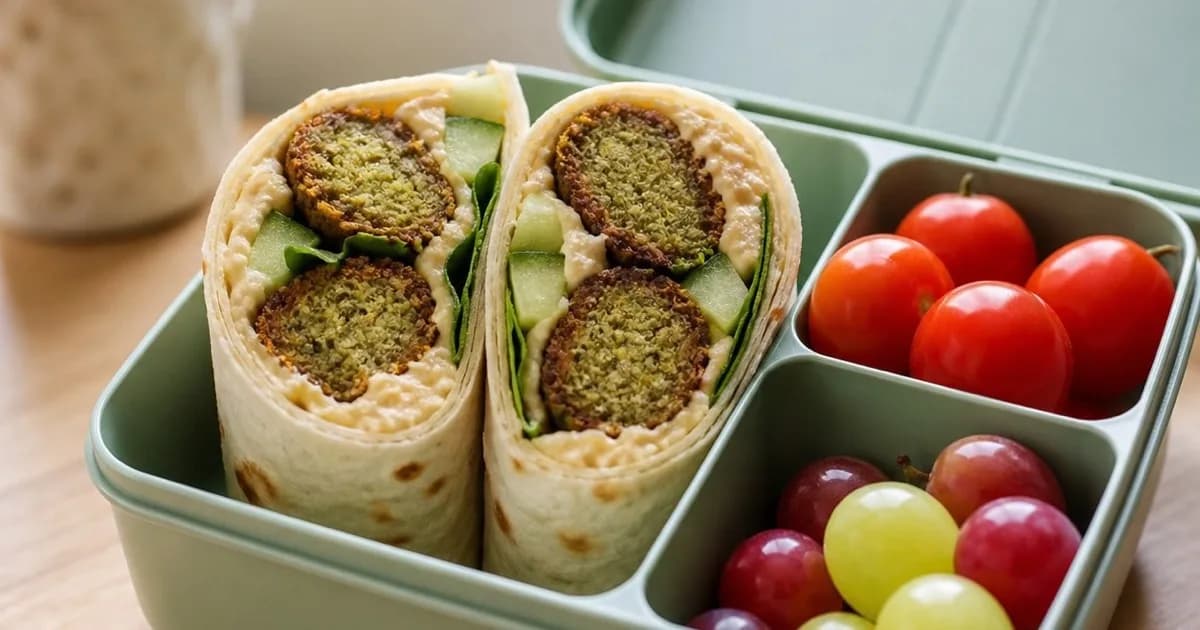
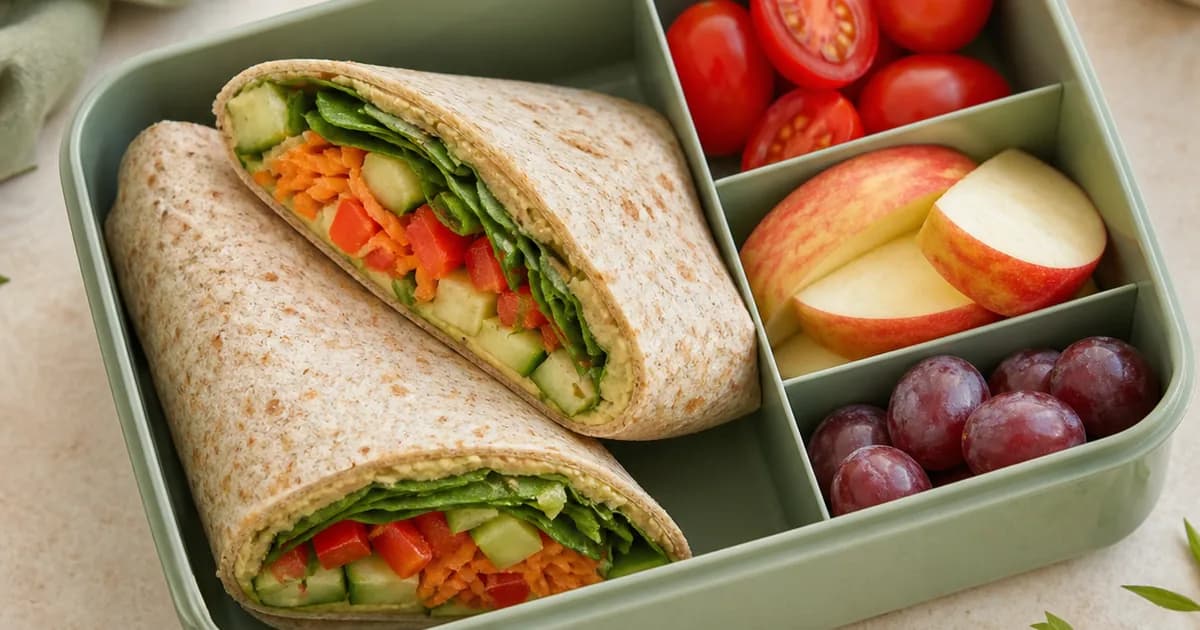
- Chicken and lettuce wrap (using leftover roast chicken)
- Cherry tomatoes
- Yoghurt (from tub)
- Water
Thursday
- Savoury muffin (batch cooked)
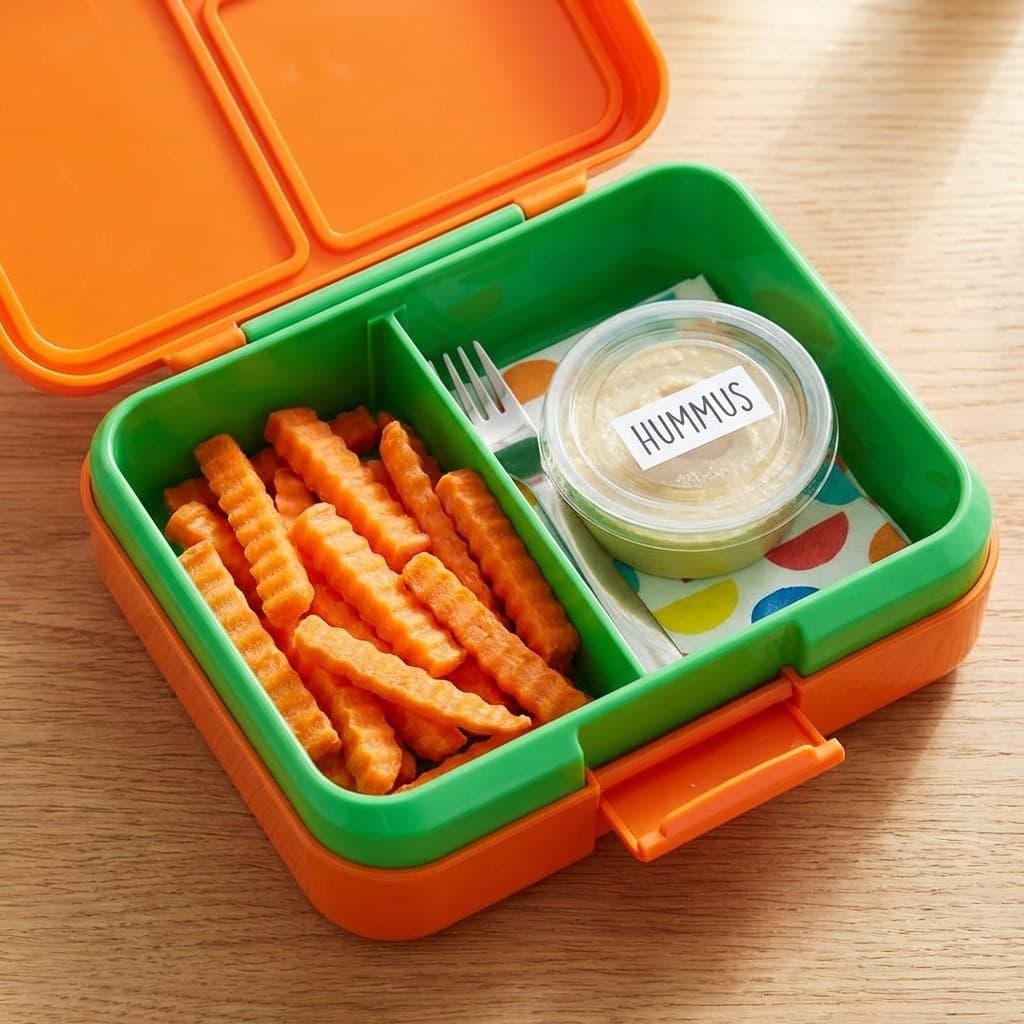
- Cucumber sticks with hummus
- Mandarin
- Water
Friday
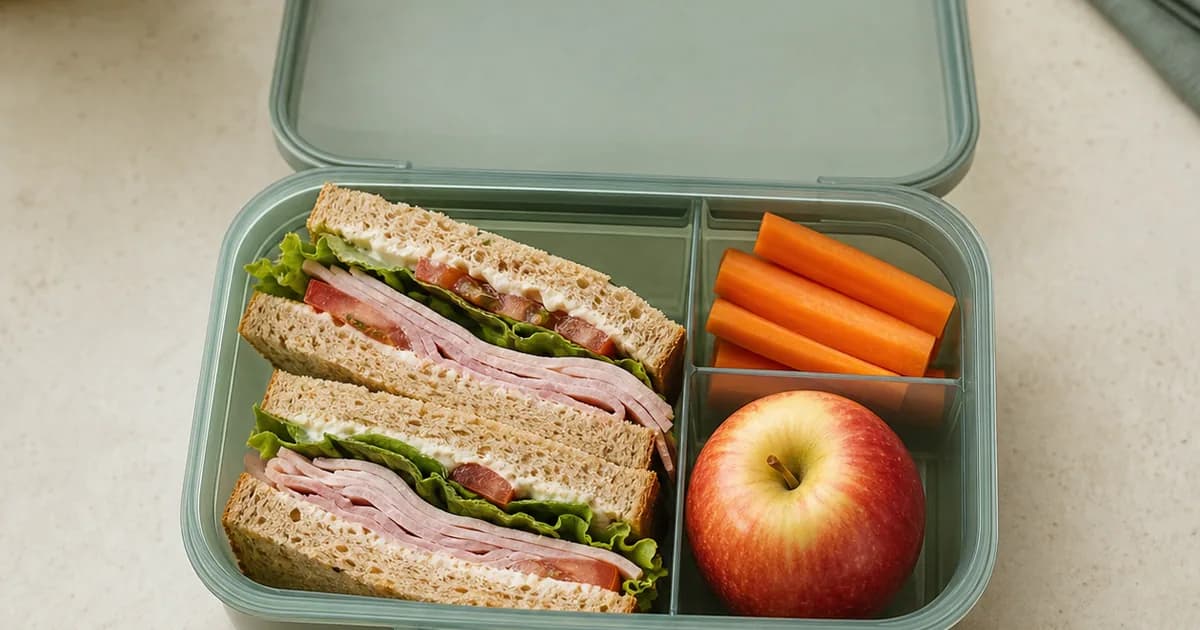
- Ham and cheese sandwich
- Veggie frittata slice (batch cooked)
- Grapes
- Energy ball
- Water
Reducing Food Waste
Food waste is money waste. Reduce it by:
- Freezing bread — take out two slices each morning; they defrost by lunchtime and keep the sandwich cool
- Using veggie scraps — carrot tops, celery leaves, and onion ends can become stock for soups
- Checking use-by dates when you shop — choose items with the longest shelf life
- Storing produce correctly — bananas on the bench (not in the fridge), leafy greens in a damp tea towel in the crisper
- Repurposing uneaten lunchbox items — if the carrot sticks come home, use them in tonight's stir-fry
When Kids Complain About "Boring" Lunches
Budget does not have to mean boring. Small touches make a big difference:
- Cut sandwiches into shapes with cookie cutters (you already own these)
- Use different wraps — mountain bread, rice paper, or tortillas instead of sliced bread
- Add a tiny treat occasionally — a few chocolate chips, a homemade biscuit, or a single fun-size item from a multipack
- Let kids choose — give them three budget-friendly options and let them pick two for tomorrow's lunchbox
- Rotate the menu — even with the same ingredients, different presentations keep things interesting
Emergency Budget Lunchbox Ideas (Under $2)
For those particularly tight weeks:
- Rice and soy sauce in a thermos — costs under 50 cents
- Vegemite scrolls — bread, butter, Vegemite, rolled up and sliced
- Egg sandwiches — boiled eggs mashed with a little mayo
- Banana pikelets — 1 banana + 1 egg + 1/4 cup flour, cooked in a pan
- Baked beans on toast (pack in a thermos) — a tin of baked beans costs about $1
Loyalty Programs: Getting More From Every Dollar
Woolworths Everyday Rewards
Woolworths' loyalty program is free to join and offers genuine savings for regular shoppers:
- Earn 1 point per dollar spent in-store and online
- Regular bonus points offers on lunchbox staples — watch for 10x points events on bread, cheese, and snack items
- Convert 2,000 points to a $10 discount off your next shop
- Alternatively, convert points to Qantas Frequent Flyer points (1,000 Everyday Rewards points = 500 Qantas points)
- The Woolworths Everyday Extra subscription ($7/month) provides 10% off one shop per month plus a free fruit piece for kids — worth it for families spending $200+ per month at Woolworths
Coles Flybuys
Coles' loyalty program is equally accessible and offers a straightforward value proposition:
- Earn 1 point per dollar at Coles, and 2 points per dollar on a Coles Mastercard
- Redeem 2,000 points for $10 off your shop
- Regular bonus points events on household staples, including lunchbox items
- Link Flybuys to Kmart and Target for additional points on school lunchbox equipment (containers, water bottles, insulated bags)
- Watch for 10x points events which occasionally apply to entire categories like dairy or bakery
Price Matching
Neither Woolworths nor Coles operates a formal price-match guarantee, but both stores monitor each other's pricing closely. If you spot a significant price difference on a staple item, check the competitor's app — they often match within days. Some families use apps like Frugl or PriceHipster to compare real-time prices across both stores and find the best deals each week.
Government Support
If you are struggling financially, you may be eligible for:
- School breakfast programs — many Australian schools offer free breakfast through organisations like Foodbank Australia
- Centrelink payments including Family Tax Benefit
- State-based school assistance — check with your school's welfare coordinator
There is no shame in using these resources. They exist to help families through tough times.
Start planning affordable, healthy lunchboxes today. Try the Aussie Lunchbox Planner →
Related reading: Canteen vs packed lunch · Seasonal produce calendar
About this article
This article was researched and written by Yong Jae Lee, a parent based in Auckland, New Zealand, who runs Aussie Lunchbox and its sister site Kiwi Lunchbox as a solo project. I am not a dietitian or a health professional, so nothing here is medical advice. Where an article rests on desk research rather than something I have cooked or used myself, it says so, and nutrition writing is aligned with Australia's healthy eating guidelines. If you spot an error or have a suggestion, please contact us.